

Understanding Price Elasticity on Amazon
Price elasticity explains how strongly buyers react when prices change. When price elasticity is low, buyers keep purchasing even if prices rise. When price elasticity is high, small price changes can quickly reduce sales.
On Amazon, price elasticity does not stay constant throughout the year. It changes based on buyer intent, urgency, and competition. This is why price elasticity behaves very differently in December compared to January.
Why Price Elasticity Is Lower in December
December buyers are driven by urgency. Gifts need to arrive on time, and convenience matters more than price.
During this period, price elasticity is lower because:
Buyers are less willing to wait
Delivery speed matters more than savings
Gift urgency overrides price comparison
Stock availability limits alternatives
As a result, moderate price increases often do not reduce demand. Sellers can hold prices longer without hurting sales.
Why Price Elasticity Increases Sharply in January
January removes urgency from the buying process. Shoppers are no longer racing against deadlines and become far more selective.
Price elasticity increases in January because:
Buyers compare prices more carefully
Demand drops unevenly across categories
Returns change available inventory
Competition becomes unpredictable
This means small pricing mistakes have a larger impact on sales. Listings priced even slightly above market expectations can lose momentum quickly.
How Price Elasticity Differs Between December and January
| Factor | December | January |
|---|---|---|
| Buyer urgency | High | Low |
| Price sensitivity | Lower | Higher |
| Tolerance for price changes | Strong | Weak |
| Demand consistency | Predictable | Volatile |
| Impact of small price shifts | Limited | Significant |
This comparison shows why sellers must treat January pricing differently from December pricing.
How Price Elasticity Should Shape Amazon Pricing in January
In January, pricing should focus on alignment, not aggression.
Understanding price elasticity helps sellers:
Test prices more carefully
Avoid overpricing during demand drops
Prevent unnecessary discounting
Protect Buy Box visibility
Adjust faster when sales slow
Pricing decisions must be reviewed more frequently because buyer response changes quickly.
Price Elasticity Impact in December vs January
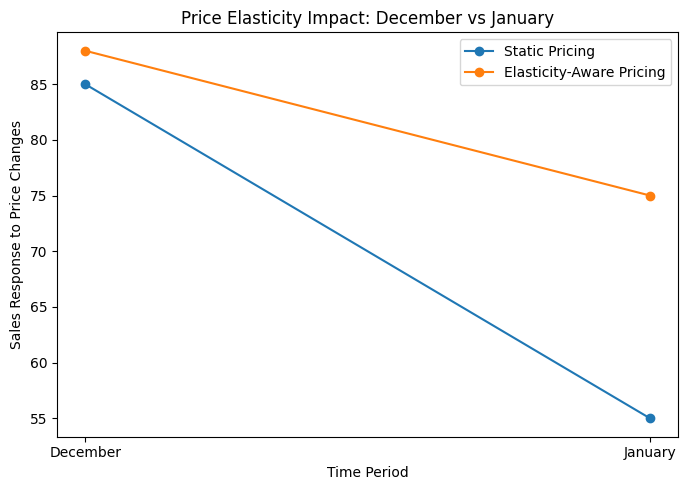
This graph compares seller performance under price changes in December and January.
X-Axis
Time period (December vs January)
Y-Axis
Sales response to price changes
What the graph shows:
December sales remain stable despite moderate price increases
January sales drop sharply when prices rise even slightly
Higher elasticity in January magnifies pricing errors
Responsive pricing performs better than static pricing after holidays
The visual highlights why price elasticity plays a bigger role in January pricing decisions.
Common Pricing Mistakes Sellers Make After the Holidays
Many sellers carry December habits into January, which leads to problems.
Holding holiday prices too long
Ignoring increased price sensitivity
Delaying adjustments after sales slow
Discounting without testing demand
These mistakes reduce recovery speed and weaken listing performance.
How Buyer Behavior Shifts After the Holiday Rush
Buyer intent changes dramatically once the holiday season ends. In December, most purchases are driven by deadlines and gifting needs. In January, shoppers slow down and begin evaluating products more carefully.
Instead of impulse buying, buyers focus on value, reviews, and alternatives. They take time to compare listings and often return later before making a decision. This change affects conversion patterns and increases the importance of accurate pricing alignment.
Sellers who recognize this shift can adjust expectations, avoid overreacting to short-term drops, and maintain steady performance as demand normalizes.
Why Frequent Monitoring Matters More Than Aggressive Changes
After the holidays, pricing success is less about making big moves and more about paying attention. Market conditions change quickly, and small adjustments often outperform large corrections.
Regular monitoring helps sellers detect early signs of change, such as declining conversions or reduced Buy Box visibility. Instead of reacting emotionally, sellers can respond with controlled updates that protect margins and maintain listing health.
This disciplined approach prevents overcorrection and supports smoother performance during uncertain demand periods.
How Competitor Behavior Becomes Less Predictable After December
After December ends, competitor behavior on Amazon becomes far less consistent. Some sellers reduce prices aggressively to clear inventory, while others hold prices steady to protect margins. This mixed behavior creates uneven market conditions.
Price movements no longer follow clear patterns. Sudden undercutting may appear one day and disappear the next. Sellers who rely on assumptions instead of observation often react incorrectly and lose positioning.
By watching competitor actions closely and responding carefully, sellers can avoid unnecessary price swings and remain competitive without damaging long-term performance.
Using Price Elasticity to Reset Amazon Pricing After Holidays
January is the best time to learn how buyers respond to your prices.
Sellers should:
Monitor sales response after small changes
Adjust prices gradually
Track Buy Box movement closely
Balance inventory and demand signals
Using price elasticity as a guide allows sellers to stabilize performance and prepare for the next demand cycle.
Final Thoughts on Price Elasticity After the Holidays
December hides pricing flaws with strong demand. January exposes them. That is why price elasticity matters more after the holidays than during peak season.
Sellers who understand and respect price elasticity make smarter pricing decisions, recover faster from Q4, and protect margins during unpredictable demand periods.
January is not about selling faster. It is about pricing smarter.