Introduction: Amazon Overstocking Prevention
Every seller prepares aggressively for Q4 ordering stock early, planning promotions, optimizing listings. But one silent issue often goes unnoticed until it’s too late: inventory build-up caused by slow repricing.
During the holiday season, Amazon’s pricing landscape moves at hyperspeed. Competitors adjust their offers within seconds, the Buy Box rotates rapidly, and shopper demand fluctuates hour by hour. If your pricing fails to keep up, your inventory stops moving—creating the exact scenario sellers work so hard to avoid.
This is where Amazon overstocking prevention becomes critical. It’s not just about how much inventory you order; it’s about how fast your inventory reacts to market signals.
Why Slow Repricing Fails During Q4
In regular months, a few minutes of delay might not seem harmful. But Q4 is intense, volatile, and extremely competitive. Some sellers update prices dozens of times per hour.
Here’s how slow repricing sabotages Amazon overstocking prevention during peak season:
1. Buy Box loss leads to instant drop in conversions
Even a 10–15 minute delay means your competitors capture high-traffic windows.
2. Competitor undercuts happen faster than your repricer reacts
If your price lags, your offer becomes irrelevant especially in high-demand categories.
3. Price gaps widen during peak traffic spikes
Black Friday, Cyber Monday, and December gifting week expose slow repricers brutally.
4. Inventory that should move in hours takes days
This directly increases storage, aging, and overstocking risks.
Slow repricing doesn’t just cost sales it creates long-term inventory problems that spill past Q4, impacting January performance too.
How Slow Repricing Creates the Inventory Trap
The chain reaction is predictable but dangerous:
Step 1 — You lose the Buy Box due to stale pricing.
No Buy Box = no velocity.
Step 2 — Sell-through slows significantly.
Your planned inventory movement collapses.
Step 3 — Units pile up in FBA warehouses.
Especially risky for seasonal and gift-oriented products.
Step 4 — Storage fees spike in December.
The highest of the entire year.
Step 5 — Post-Q4, your stock drops in value.
Demand evaporates while competitors liquidate.
Strong Amazon overstocking prevention requires avoiding this domino effect altogether which is only possible when pricing reacts instantly to market shifts.
Slow vs Fast Repricing for Amazon Overstocking Prevention
| Factor | Slow Repricing (Delays of 10–30 min) | Fast Repricing (Instant or Real-Time) |
|---|---|---|
| Buy Box Stability | Low, inconsistent | High and predictable |
| Sell-Through Rate | Sluggish, volatile | Smooth and consistent |
| Inventory Risk | High risk of overstocking | Low inventory accumulation |
| Response to Competitors | Always behind | Always aligned |
| Impact on Storage Costs | Fees increase sharply | Fees stay controlled |
| Q4 Profitability | Declines due to aging stock | Maximized through steady movement |
This comparison clearly shows that fast repricing is one of the most effective tools for Amazon overstocking prevention, especially in Q4.
Repricing Impact On Inventory Flow
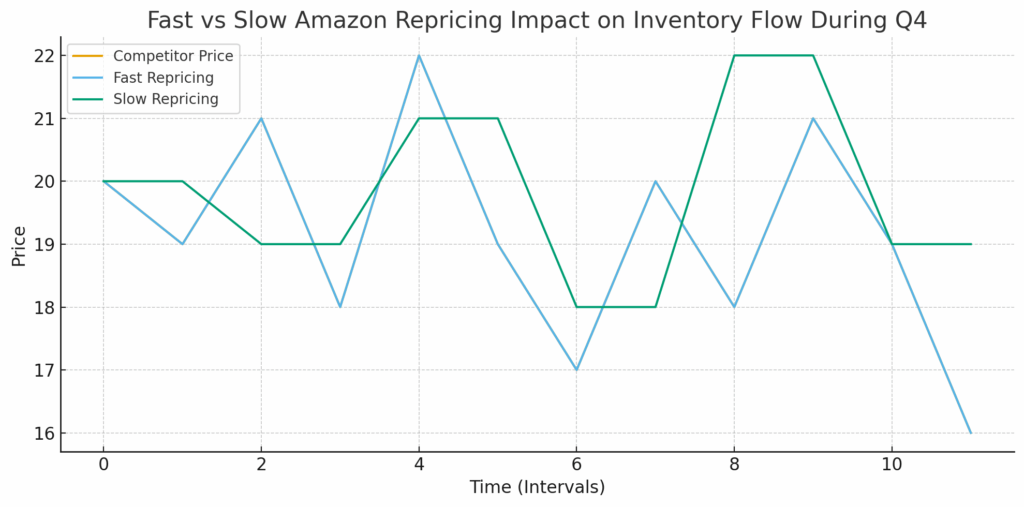
The graph illustrates how real-time pricing helps maintain smooth inventory movement while delayed pricing creates dangerous slowdowns. In the trendline representing fast repricing, prices mirror competitor behavior, ensuring consistent Buy Box access and steady sell-through.
However, the slow-pricing line lags behind competitor changes, creating long periods where the offer becomes noncompetitive. During these windows, inventory stops selling, velocity drops, and units accumulate in Amazon warehouses.
This visual proves an essential point:
Every pricing delay directly increases the likelihood of excess stock during the holiday rush.
A fast, responsive pricing system is critical for reliable Amazon overstocking prevention, especially as Q4 volatility intensifies.
How to Strengthen Amazon Overstocking Prevention During Q4
1. Adopt Real-Time Repricing
Instant reactions prevent Buy Box loss and maintain velocity.
2. Implement Velocity-Based Price Adjustments
If units stall for hours, auto-lower price; if velocity spikes, auto-raise price.
3. Add Inventory-Age Triggers
Automate price adjustments when stock reaches aging checkpoints.
4. Build Q4-Aware Floor Prices
Include holiday storage surcharges, returns, and restocking fees in floor logic.
5. Monitor Competitor Stock-Out Events
When competitors run out of stock, dynamic repricing unlocks premium pricing opportunities.
Conclusion
Overstocking isn’t just a supply issue it’s often a pricing issue.
Slow repricing restricts visibility, slows movement, and piles up units right when sellers need them moving the fastest.
To truly protect your margins and stay competitive during the busiest time of year, Amazon overstocking prevention must include real-time repricing as a core strategy. It’s the smartest way to maintain velocity, control storage fees, and prevent leftover stock after Q4.