

Understanding How January Differs From December on Amazon
December is driven by urgency. January is driven by uncertainty. This difference is why amazon pricing adjustments matter more after the holidays than during peak season.
In December, demand is predictable. Shoppers are buying gifts, delivery deadlines drive urgency, and traffic remains consistently high. Pricing changes help, but even imperfect prices can still convert.
January is different. Demand fluctuates daily, buyer intent changes, and competition becomes uneven. Without frequent amazon pricing adjustments, sellers quickly lose alignment with the market.
Why December Pricing Is More Stable Than January Pricing
In December, pricing stability works because demand is strong across most categories. Sellers can hold prices longer without losing sales.
Key reasons December needs fewer adjustments:
High buyer urgency
Less price comparison
Stronger Buy Box tolerance
Predictable traffic patterns
Because demand stays elevated, pricing mistakes are often forgiven.
Why January Requires More Amazon Pricing Adjustments
January removes the safety net that December provides. Shoppers slow down, returns increase, and buying intent becomes selective.
This forces sellers to rely on amazon pricing adjustments to stay competitive.
Reasons January needs more frequent changes:
Daily demand swings
Inconsistent competitor behavior
Inventory pressure after Q4
Buy Box rotation becomes more sensitive
Higher impact of small price differences
In January, static pricing creates gaps faster than in December.
December vs January Pricing Behavior on Amazon
| Factor | December | January |
|---|---|---|
| Demand level | High and steady | Low and unstable |
| Buyer urgency | Strong | Weak |
| Price sensitivity | Lower | Higher |
| Buy Box tolerance | Flexible | Strict |
| Need for pricing changes | Moderate | High |
This comparison shows why amazon pricing adjustments must increase after the holidays.
How Amazon Pricing Adjustments Protect Performance in January
Frequent adjustments in January are not about discounting. They are about staying aligned.
Smart amazon pricing adjustments help sellers:
Respond to demand drops early
Avoid long Buy Box losses
Test price sensitivity safely
Prevent inventory stagnation
Recover from Q4 positioning shifts
January rewards sellers who observe and adjust, not those who wait.
Pricing Stability in December vs January
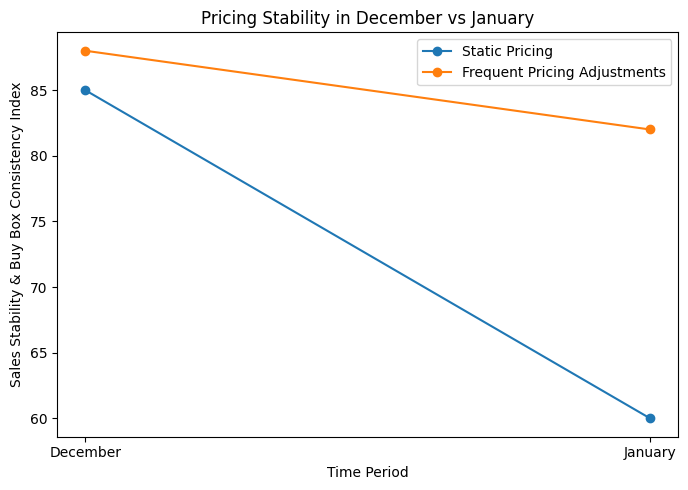
The graph above compares seller performance in December and January, focusing on sales stability and Buy Box consistency under two different pricing approaches: static pricing and frequent pricing adjustments.
What the Graph Shows
In December, sellers using static pricing maintain relatively strong performance. Holiday urgency, gift buying behavior, and predictable demand allow prices to remain effective even when adjustments are limited. As shown in the graph, static pricing still delivers acceptable Buy Box consistency during peak season.
In January, this changes sharply. The static pricing line drops significantly, showing a clear decline in sales stability and Buy Box consistency. This reflects how post-holiday demand becomes unpredictable and far more sensitive to pricing accuracy. Sellers who do not adjust prices quickly begin to lose alignment with the market.
By contrast, sellers who apply frequent amazon pricing adjustments maintain much stronger performance in January. Their line remains stable, showing that pricing responsiveness helps preserve visibility and Buy Box rotation even as demand fluctuates.
Why This Difference Matters
The widening gap between December and January highlights an important reality:
- December pricing can remain stable with fewer changes
- January pricing performance declines quickly without adjustments
- Sellers who increase pricing activity in January protect visibility
- Static pricing causes faster Buy Box loss after the holidays
This visual clearly reinforces why amazon pricing adjustments matter more after the holiday season than during peak demand periods.
Common January Pricing Mistakes Sellers Make
Many sellers carry December habits into January, which creates problems.
Holding holiday prices too long
Avoiding price testing
Reacting too late to demand drops
Ignoring Buy Box sensitivity
Waiting for sales instead of adjusting prices
These mistakes reduce recovery speed after Q4.
How to Approach Amazon Pricing Adjustments in January
January pricing should be deliberate and frequent.
Best practices include:
Smaller price changes
More frequent evaluations
Watching Buy Box behavior closely
Balancing inventory and demand
Using data instead of emotion
This approach allows sellers to stabilize performance and prepare for February demand.
Final Thoughts on Amazon Pricing Adjustments After the Holidays
December hides pricing flaws with strong demand. January exposes them. That is why amazon pricing adjustments become more important after the holiday rush ends.
Sellers who increase pricing responsiveness in January protect margins, regain Buy Box share, and reset their listings for the new year. Those who keep December pricing habits often struggle to recover.
The start of the year is not about selling faster. It is about pricing smarter.