Why Pricing Confidence After Q4 Is Often Lost
Q4 is intense. Prices change quickly, competitors react aggressively, and sellers often make decisions under pressure. By the time the holiday season ends, many sellers are unsure whether their prices are too high, too low, or simply wrong.
This uncertainty leads to hesitation. Sellers either stop adjusting prices altogether or make sudden changes without a clear plan. Rebuilding pricing confidence after Q4 is about moving away from panic and returning to structured decision-making.
How Q4 Pricing Behavior Impacts January Decisions
During Q4, pricing is often driven by urgency. Sellers focus on winning short-term sales rather than long-term stability. While this can work during peak demand, it creates confusion once the season ends.
In January, demand slows and buyer behavior changes. Pricing tactics that worked in December may no longer apply. Sellers must accept that Q4 performance does not define the correct price for the rest of the year.
Common Signs That Pricing Confidence After Q4 Is Broken
Many sellers experience similar patterns after Q4.
They hesitate to raise prices
They overreact to small sales drops
They discount too quickly
They avoid testing new price points
They constantly second-guess decisions
These behaviors weaken performance and delay recovery.
Reactive Pricing vs Confident Pricing After Q4
| Behavior | Reactive Pricing | Confident Pricing |
|---|---|---|
| Response to sales drop | Immediate discount | Observation and testing |
| Price changes | Large and frequent | Small and controlled |
| Buy Box impact | Unstable | Consistent |
| Margin control | Weak | Protected |
| Decision process | Emotional | Data-driven |
This table shows how confidence changes the outcome of pricing decisions.
How to Start Rebuilding Pricing Confidence in January
Confidence comes from structure. Sellers should begin by simplifying their pricing approach.
Key steps include:
Reviewing Q4 results without emotion
Identifying price ranges that still convert
Removing temporary holiday pricing logic
Observing demand before making changes
This reset allows sellers to regain control instead of reacting blindly.
Why Small Price Tests Matter More Than Big Moves
Large price changes create uncertainty. Small price tests provide clarity.
By adjusting prices gradually, sellers can see how buyers respond without risking Buy Box stability or margins. These tests rebuild trust in the pricing process and help sellers feel confident making future adjustments.
Pricing Confidence After Q4 Recovery
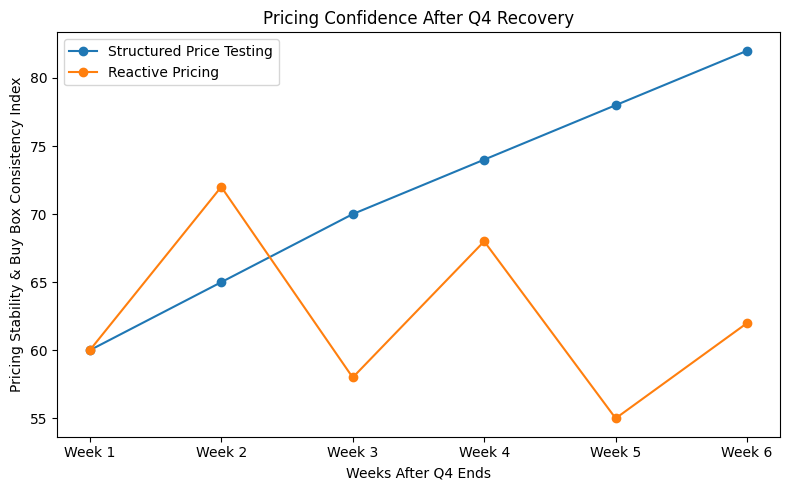
This graph compares two sellers in the weeks following Q4.
X-Axis
Weeks after Q4 ends
Y-Axis
Pricing stability and Buy Box consistency
What the graph shows:
Seller using structured price testing regains stability steadily
Seller using reactive pricing sees ongoing volatility
Controlled adjustments improve confidence and performance
Unplanned changes delay recovery and weaken results
The visual highlights how confidence grows through consistency, not speed and that’s how we build Pricing Confidence After Q4.
Why Confidence Leads to Better Buy Box Performance
Amazon rewards predictable behavior. When prices move in a controlled way, Buy Box rotation becomes more stable and conversion signals improve.
Confident pricing decisions reduce unnecessary competition and help listings regain trust with the marketplace. Over time, this stability translates into stronger visibility and healthier sales patterns.
How Technology Helps Restore Pricing Confidence
After Q4, manual pricing often feels overwhelming. Automation helps remove emotion from decisions.
With structured pricing rules, sellers can rely on consistent logic rather than guesswork. This restores confidence by ensuring prices change only when real signals justify it.
Final Thoughts on Rebuilding Pricing Confidence After Q4
Losing confidence after Q4 is normal. Rebuilding it is a process. Sellers who slow down, observe demand, and make controlled adjustments recover faster than those who chase short-term results.
Pricing confidence does not come from guessing correctly every time. It comes from having a system that supports better decisions over time. January is the moment to rebuild that system and move forward with clarity.